Tree Solutions VIC

Date palms · fan palms · cocos

Palm Tree Removal in Melbourne, From Canary Island Dates to Cocos

Palms behave nothing like other trees. The crown is heavy, the trunk is fibrous, the fronds are spiked on some species, and the stump does not grind the same way. Palm tree removal in Melbourne is planned around those differences.

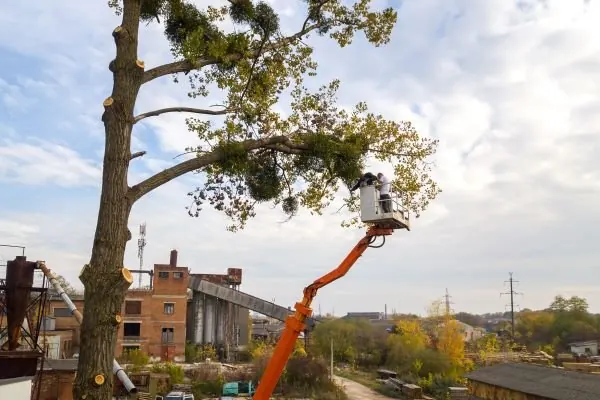
Elevated work platform raised beside a tall tree above suburban rooftops

What a palm tree removal quote should cover

01The species and approximate height of each palm
02Method: climbing, elevated work platform or crane, and where the crown will be lowered
03Whether a heritage or landscape overlay applies to the palm
04Trunk disposal, including cutting the trunk into lengths that can be carried out
05Stump: cut flush, ground or dug out
06Protection for roofs, gutters, paving and pools below the crown

Prices for this work are on the Melbourne tree removal cost guide. Permit questions: read the permit guide.

The palms Melbourne gardens are full of

Palms were planted widely in Melbourne in two waves: big Canary Island date palms in the gardens of Victorian, Edwardian and interwar homes, and fan palms and cocos palms in later decades. Many are now far larger than the gardens they were planted in.

  • Canary Island date palm. Thick trunk, huge arching crown, sharp spines at the base of each frond. Older specimens are a major job because of the weight of the crown.
  • Mexican and Californian fan palms. Tall, slender trunks that can reach well above the roofline, with fan-shaped fronds that hang in a skirt if not cleaned.
  • Cocos or queen palm. Common in newer gardens. Drops heavy fruit stalks and old fronds, and its seeds sprout readily in surrounding beds.
  • Chinese windmill palm. Smaller and hardy, often planted against walls and fences where its roots and trunk eventually crowd paving.

Why people remove palms

  • Fronds and fruit. Old fronds and seed stalks fall onto roofs, gutters, pools and paths. Cocos fruit attracts birds and leaves a mess.
  • Spines. Date palm spines can cause painful injuries, which matters near paths and play areas.
  • Height and lean. Tall fan palms can lean over neighbouring roofs or power lines as they age.
  • Renovation. A palm planted beside the front path decades ago may sit exactly where a new driveway or extension needs to go.

How a palm comes down

Most palms are removed from the top. A climber or an elevated work platform takes the crown off first, frond by frond on a big date palm, then the trunk is cut in sections and lowered. Heavy date palm crowns may be lowered in one piece on a rope where it is safe to do so. On open sites with clear ground, a smaller palm may be felled.
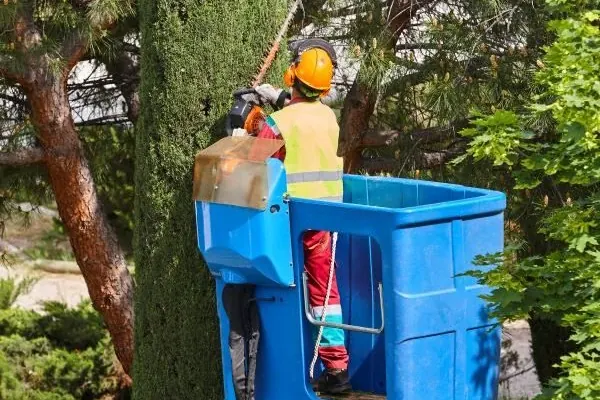
Elevated work platform truck with an operator working in a tree canopy

Palm trunks are fibrous and heavy for their size. They are cut into lengths that can be carried out, and they do not chip easily, so disposal is part of the quote.

Palm cleaning instead of removal

If the palm is healthy and you like it, cleaning may be enough. That means removing dead fronds, fruit stalks and seed heads, and trimming the skirt on fan palms. It keeps the palm tidy and reduces what falls on the roof and pool. Ask for a cleaning price alongside a removal price if you are undecided.

Heritage palms

Some Canary Island date palms are protected as part of heritage gardens and streetscapes in Melbourne, and a Heritage Overlay can include controls on tree removal. If your home is in a heritage precinct, check the overlay and talk to your council before booking. Our permit guide covers how overlays work.

Costs

Palm prices depend mostly on height, species and how the crown can be lowered. Planning bands are on the Melbourne tree removal cost guide. After removal, the stump can be ground below the surface on the same visit.

Where we arrange palm tree removal

Other tree work

  • Tree Removal Unwanted, dead, split or badly placed trees dismantled in controlled sections and cleared, after the council and overlay questions are answered.
  • Stump Removal Whole stumps and the main root plate dug out with an excavator where a slab, driveway, pool or extension is going in.
  • Stump Grinding Stumps ground below the surface so you can returf, replant or pave, with services located before the grinder starts.
  • Bamboo Removal Running and clumping bamboo cut out, rhizomes dug or ground, and the boundary checked so it does not come back from next door.
Good to know

Answers to the questions we hear most

Which palms are most often removed in Melbourne?

Canary Island date palms are the big ones, often planted in front gardens of older houses and now very large. Mexican and Californian fan palms grow tall and thin. Cocos (queen) palms are common in newer gardens and drop fruit and old fronds constantly.

Is a palm harder to remove than a normal tree?

It can be. The crown of a large date palm is very heavy and the spiked fronds make climbing awkward. The trunk is fibrous rather than woody, which affects how it is cut and disposed of. On the other hand, palms have no big branches, so there is less rigging.

Can a palm stump be ground?

Yes. Palm stumps are fibrous and grind differently from hardwood, but a grinder will take them below ground. Because palms have a mass of fine roots rather than a large root plate, the stump area usually settles easily.

Can I remove a Canary Island date palm without a permit?

Often you can, but not always. Some Canary Island date palms in Melbourne are part of heritage-listed gardens or streetscapes, and a Heritage Overlay can control tree removal. Check your property's overlays and with your council first.

Can a palm be transplanted instead of removed?

Some palms can be moved because their root balls are compact. It needs crane access, a destination and careful timing, and it is a specialist job. Ask about it when you request a quote if you would rather keep the palm.

Quotes are free

Ready when you are

One call is enough to get the ball rolling.

Phone (03) 4709 0797
Tree Solutions VIC Phone (03) 4709 0797 Free on-site quote
Phone (03) 4709 0797