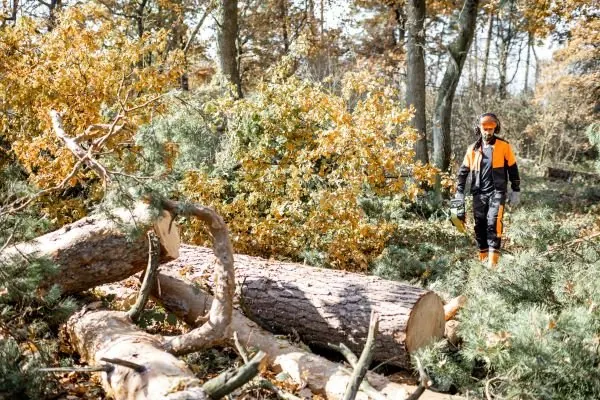
Bigger blocks, taller trees
Mooroolbark grew mostly through the 1960s, 70s and 80s, when brick veneer and weatherboard homes went up on generous blocks across rolling country at the edge of the Yarra Valley. Many builders left the existing trees standing, so a typical Mooroolbark garden can have one or two tall eucalypts that are older than the house, alongside the pines, cypress and planted gums the first owners added.
Fifty years on, those trees are big. Some are healthy and worth keeping. Others lean towards the house, drop limbs in winter winds, or stand where a second dwelling or a new shed is planned. Tree removal in Mooroolbark is usually about working out which is which, and then dealing with the rules that apply to native trees.
Native trees and Yarra Ranges controls
Remnant messmate, manna gum, swamp gum and narrow-leaf peppermint are common across this part of the outer east. These are native vegetation, and native vegetation removal in Victoria is controlled through the planning scheme. Yarra Ranges Council also applies overlays across much of the municipality, including vegetation protection, significant landscape, environmental significance and bushfire overlays, depending on the location.
What that means in practice:
- A planted exotic such as a pine or cypress is often less likely to need a permit, but overlays can still apply.
- A remnant native gum is more likely to need a permit, depending on your lot size and the overlays.
- Bushfire exemptions exist in some circumstances, but only under the conditions set out in the planning scheme.
Check the overlays on your property and talk to Yarra Ranges Council before any native tree comes down. Our permit guide walks through the main controls.
Working on slopes
Many Mooroolbark streets rise and fall, and backyards often drop away from the house. On a slope, wood cannot be rolled or dropped freely. Sections are lowered on ropes, logs may be cut and stacked on site, and access for a chipper or stump grinder can decide the method and the price. Clay soils turn soft in winter, so heavy machines may need to wait for drier ground or use mats to protect lawn.
After the tree is down
On a larger block you have more choices about what stays. Logs can be cut for firewood, mulch can be spread on beds, and a stump in the back corner can sometimes be left to rot. Make sure the quote says exactly what is removed and what is left. Planning figures are on the tree removal cost guide.
Jobs we are asked about in Mooroolbark
- A tall gum over the house. A remnant eucalypt that has become a worry after a windy winter, especially where it leans towards the roof or driveway.
- Pines and cypress past their best. Windbreak and hedge plantings from decades ago, now huge, shedding and casting shade across the yard.
- Fallen limbs after a storm. Branches down across fences, sheds and driveways after strong winds through the outer east.
- Clearing for a unit development. Trees on a block being subdivided, often tied to a planning permit and its landscape conditions.
Calling about a Mooroolbark property? Use the Mooroolbark line, (03) 4420 9132, or the form below.
Answers to the questions we hear most
Do I need a permit to remove a gum tree in Mooroolbark?
Possibly. Native vegetation removal is controlled through the Victoria Planning Provisions, and Yarra Ranges Council applies vegetation, landscape and bushfire overlays to many properties. Whether your tree is covered depends on the species, the overlays and the size of your lot. Check with the council before booking.
Does the 10/30 rule apply in Mooroolbark?
The bushfire exemptions in clause 52.12 of the planning scheme, often called the 10/30 rule, only apply in certain areas and under specific conditions. Do not rely on them without checking with Yarra Ranges Council whether they apply to your property.
Can I keep the wood?
Usually, yes. On bigger blocks many people keep logs for firewood. Say so when you ask for a quote, and the contractor can cut it to length and stack it where you want it.
Which number do I call for Mooroolbark?
Call the Mooroolbark line, (03) 4420 9132, or use the form on this page and include photos of the tree from a couple of angles.