Two Cranbournes
The old Cranbourne township grew as a country town on the road south, with homes on larger blocks and some trees that have stood for a long time. Around it, the City of Casey has seen some of the fastest housing growth in Victoria, with estate after estate built from the 1990s onward. Those estates have small lots, two-storey homes and narrow side setbacks, and that changes how tree removal in Cranbourne works.
On the estates
On a new estate, the trees causing problems were usually planted by the first owner or the developer. A gum or a fast-growing screen tree planted a metre from the fence can be taller than the house a decade later. Its roots spread through the sandy soil under paving and towards the slab, and its canopy pushes against the eaves and the neighbour's second storey.
These are rarely large trees by Melbourne standards, but the access is tight. Side paths can be very narrow, so wood is cut small and carried out, and only compact stump grinders fit down the side.
On older blocks
In and around the township and on the rural edge, blocks are bigger and remnant native trees are more common: manna gums, swamp paperbarks and banksias are typical of the sandy country around Cranbourne. These are the trees most likely to be covered by native vegetation controls.
Rules to check in Casey
- Your title. Estate lots often carry covenants or restrictions. Read them before removing anything significant.
- The estate permit. Trees may be shown on the estate's approved landscape plans.
- The planning scheme. Native vegetation controls and overlays in the Casey planning scheme can apply, especially to remnant trees.
- The nature strip. Street trees are council's. Contact the City of Casey about any issue with them.
Our permit guide explains how to look up the overlays on your property.
Sandy ground and roots
Much of the Cranbourne area has sandy soils. Roots run wide and shallow, so a tree's root system can extend well beyond its canopy. That makes grinding quick but means surface roots under lawn may need chasing. If a slab, shed or pool is going where the tree stood, ask whether stump removal is needed instead. Planning prices are on the tree removal cost guide.
Jobs we are asked about in Cranbourne
- A tree too big for a small lot. Gums and fast-growing natives planted when the house was new, now crowding the house and the boundary.
- Roots near the slab and paths. Trees planted close to the house on sandy ground, with roots spreading under paving.
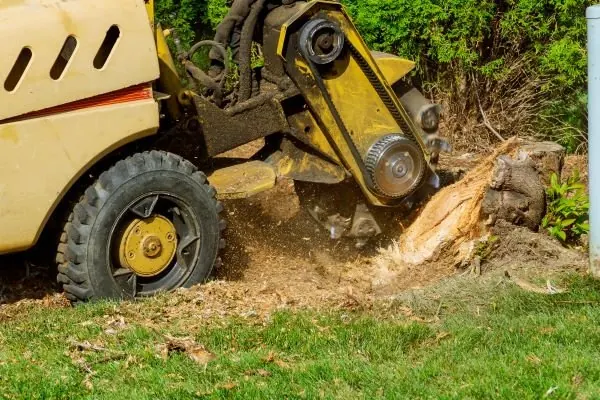
- Stump grinding after removal. Stumps ground below the surface so the area can be turfed or used for a shed or pergola.
- Remnant trees on older blocks. Large native gums on township and rural-edge blocks, where permits need checking first.
Calling about a Cranbourne property? Use the Cranbourne line, (03) 4240 5840, or the form below.
Answers to the questions we hear most
Can I remove a tree on my Cranbourne estate lot?
Often, but check two things first: any covenant or restriction on your title, and whether the estate's planning permit or the City of Casey's planning scheme controls the tree. Street trees on the nature strip belong to council and are not yours to remove.
Why do trees on new estates cause problems so quickly?
Small lots and narrow side setbacks leave little room. Fast-growing trees planted close to the house can reach the eaves within a decade, and on sandy soils their roots spread wide and shallow.
Do remnant gums in Cranbourne need a permit?
Remnant native trees are often covered by native vegetation controls in the planning scheme, and overlays may also apply. Check with the City of Casey before booking any removal of a native tree.
Which number do I call for Cranbourne?
Call the Cranbourne line, (03) 4240 5840, or send the quote form with your estate or street and a photo of the tree.