Bayside flats and bush hills
Frankston spreads from the bay inland and south. Near the centre and on the flats, postwar and 1960s to 70s homes sit on sandy blocks, with newer apartments around the train station and the foreshore. To the south, Frankston South climbs into hills with larger blocks, bush gardens and views across the bay.
Those two landscapes produce two different kinds of tree removal in Frankston.
On the flats: sand, wind and old conifers
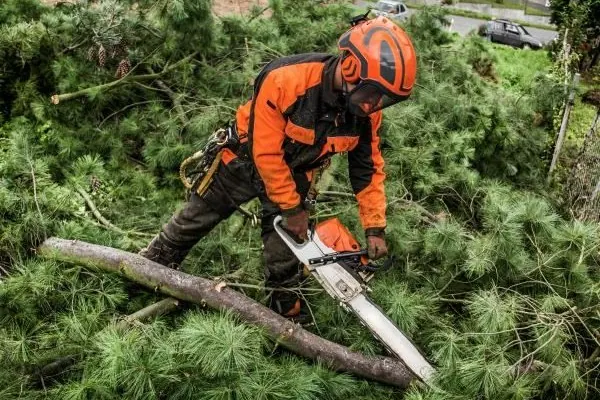
Monterey cypress and pines were planted widely on older bayside blocks to break the wind. Decades later many are enormous, with heavy limbs that come down in the strong winds that cross the bay. They are also among the most common trees removed here.
Sandy ground makes some things easier. A stump grinder moves quickly through sandy soil, and digging is straightforward. But roots in sand spread wide and shallow, so a big cypress can have roots well out under lawns and paths, and windthrow, where a whole tree tips over at the root plate, is a real risk for shallow-rooted trees in storms.
In Frankston South: bush blocks and vegetation controls
Frankston South has many properties with remnant and regrown native vegetation: coast banksia, moonah, she-oaks, coast tea-tree and eucalypts. Parts of the area are covered by vegetation protection controls in the Frankston planning scheme, and native vegetation is controlled at state level as well.
Before any tree or large shrub is removed on one of these blocks:
- Look up the overlays on your property.
- Ask Frankston City Council whether a permit is needed for the specific tree.
- Keep a copy of any approval with your quote.
The permit guide explains how overlays work and where to find them.
Slopes and access in the hills
Steeper blocks mean branches and logs are lowered rather than dropped, and wood is often carried up to the road. Driveways can be steep and narrow, limiting where a truck and chipper can park. Allow for this when comparing quotes: a tree on a sloping Frankston South block takes longer than the same tree on the flats.
Costs and paperwork
Planning prices for 2026 are on the tree removal cost guide. We ask the contractors we work with to hold the licences and insurance the job needs; ask to see them before work starts.
Jobs we are asked about in Frankston
- Monterey cypress and pine. Big conifers planted as windbreaks on older blocks, now too large and dropping branches in strong winds off the bay.
- Coast tea-tree thickets. Dense, sprawling tea-tree that has taken over a garden, where controls on native vegetation need checking.
- Trees on a sloping bush block. Gums and banksias close to the house on the hills of Frankston South, with access and permit questions.
- Storm damage. Limbs and whole trees down after the strong westerlies and southerlies that come across the bay.
Calling about a Frankston property? Use the Frankston line, (03) 4150 7132, or the form below.
Answers to the questions we hear most
Do I need a permit to remove a tree in Frankston South?
It is likely to need checking. Parts of Frankston, particularly Frankston South, are covered by vegetation protection controls in the planning scheme, and native vegetation rules also apply. Check your property's overlays and contact Frankston City Council before booking.
Is coast tea-tree a native or a weed?
Coast tea-tree is native to coastal Victoria, but it has spread beyond its natural range in some areas and is treated as a weed in places. Whether it can be removed without a permit depends on your location and overlays, so check with council.
Are pines and cypress easier to get approval for?
Planted exotic conifers are often treated differently from native vegetation, but overlays can still apply to them. Check the controls on your property before assuming a pine or cypress can come down without approval.
Which number do I call for Frankston?
Call the Frankston line, (03) 4150 7132, or send the form with a photo of the tree and a note about the slope and access.